


NEWS
SCROLL DOWN
2021/3/27 Chairman Hsieh Yamin served as the negotiator at the Kaohsiung book launch conference of "Circular Taiwan"
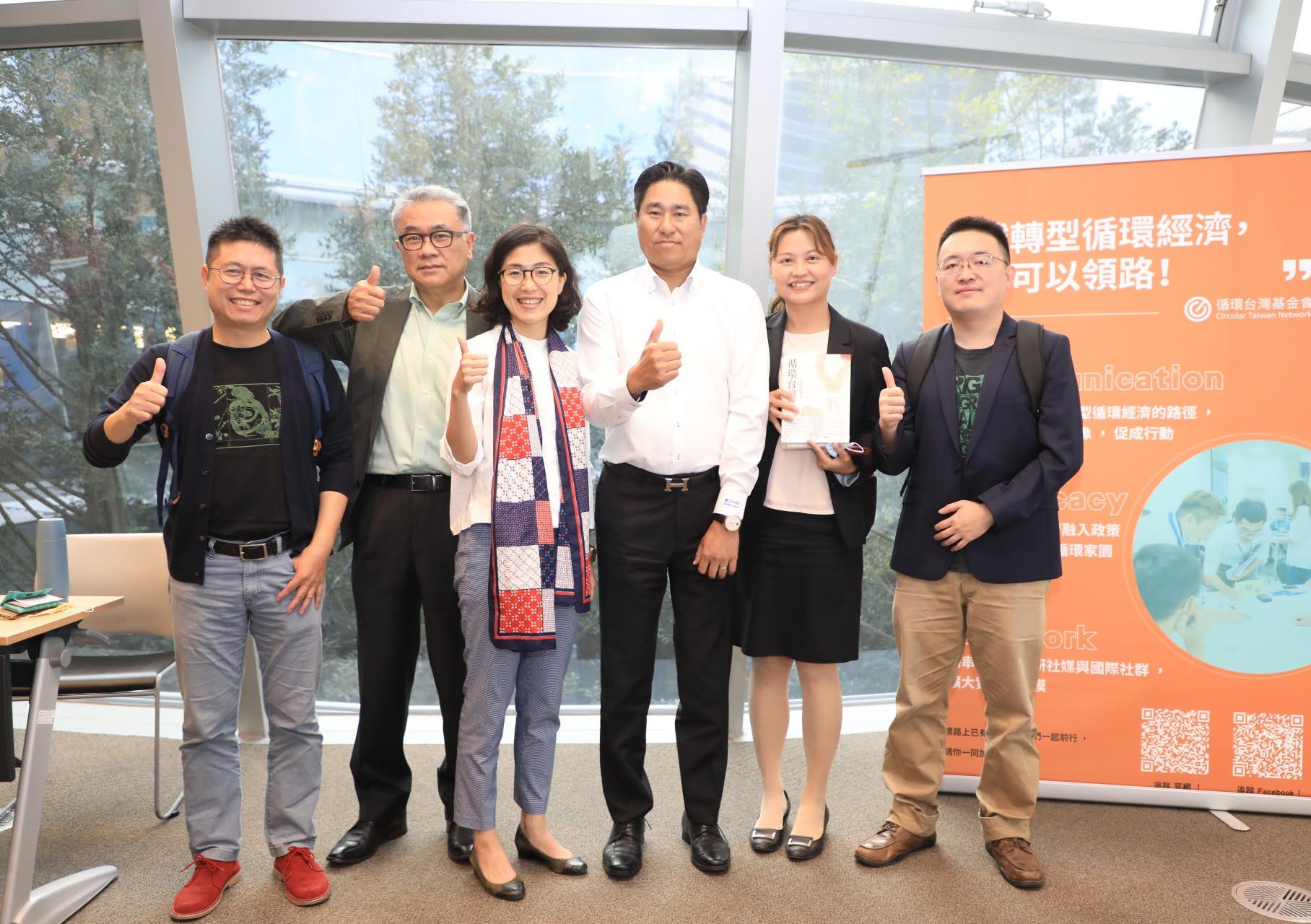
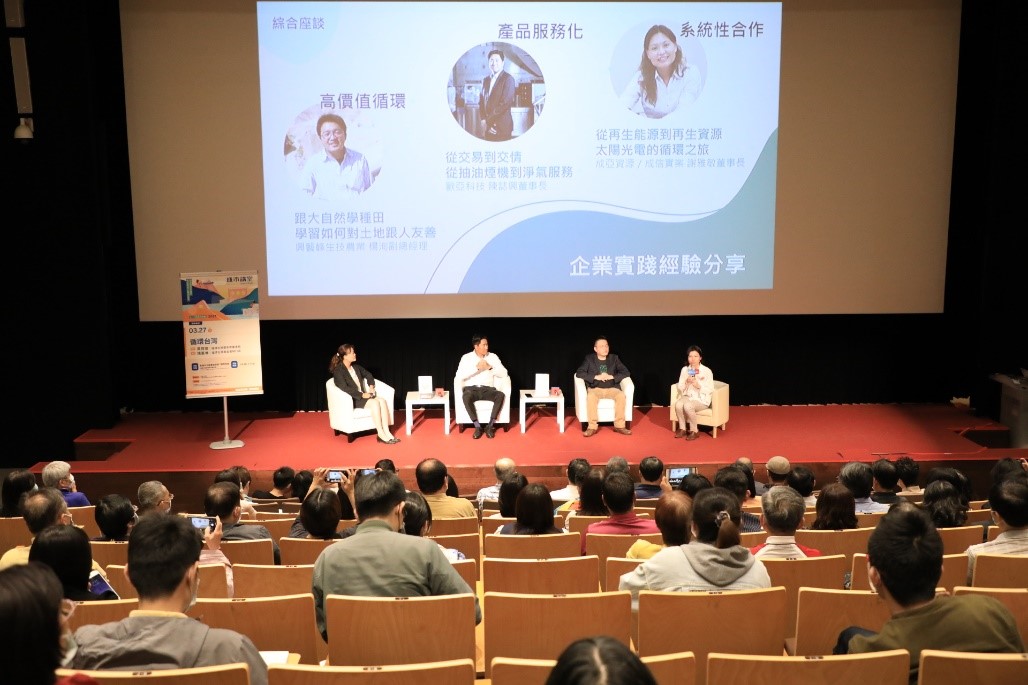
Comprehensive discussion at Kaohsiung book launch event for "Circular Taiwan"
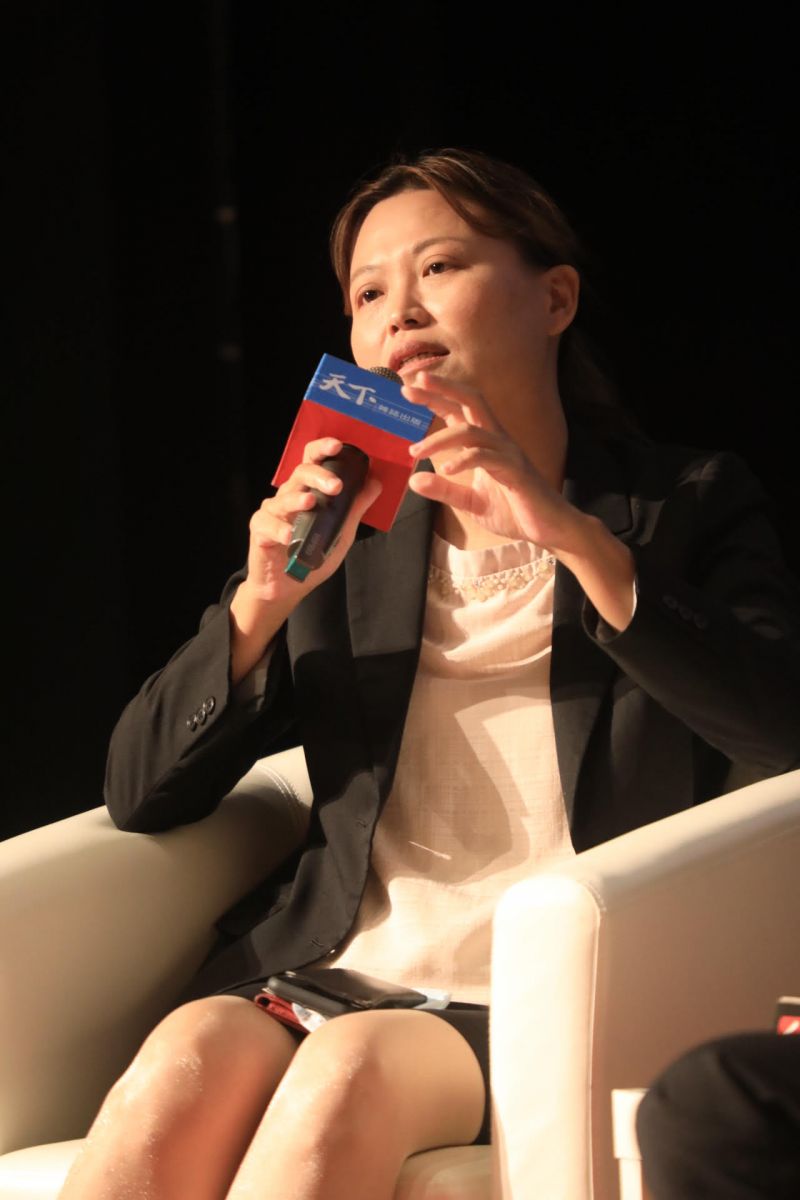
Chairman Hsieh Yamin shares practical experience of circular economy paradigm
Chairman Hsieh Yamin shared with the audience the circular economy theme of "From Renewable Energy to Renewable Resources, the Circular Journey of Solar Photovoltaics" - "Solar Energy: Taiwan's Circular Economy Example".
The content mentioned that in the process of energy transformation, solar photovoltaics play a pivotal role. Solar energy has grown rapidly in recent years and is of great help in stabilizing peak power consumption. However, the production pollution and subsequent recycling of solar panels have also caused society to question whether they are truly "environmentally friendly". But as everyone knows, the process of facing and dealing with solar energy issues is actually the best example of using circular economy to solve problems. Around 2008, many companies in Taiwan (such as Green Energy, Motech, Sino-American Crystal, AU Optronics, etc.) were producing solar cells. The wafer cutting step in the manufacturing process would produce a lot of waste mortar mixed with cutting fluid and silicon powder. Because the silicon particles inside are too fine and difficult to separate and process, many unscrupulous manufacturers have randomly discarded barrels of waste mortar on farmland or warehouses, causing major social controversy and a negative perception of the solar industry. Later, Professor Chen Weisheng of National Cheng Kung University successfully developed a waste mortar processing technology to separate cutting fluid and silicon powder through filtration and drying. The successfully produced silicon carbide can be used as a raw material for steelmaking in the steel industry, thereby replacing part of the use of coal and directly reducing air pollution. Later, the technology was transferred and "Chengya Resource Technology" was established, which successfully converted waste from the solar energy industry into resources for the steel industry.
On the other hand, the recycling and disposal of discarded and damaged solar panels is also a subject of great concern to society recently. With the rapid development of renewable energy, the number of solar photovoltaic installations is also increasing. The average design life of solar panels is about 25 years, so it can be expected that a large number will be abandoned or eliminated by then. According to estimates from the Institute of Materials and Chemistry of the Industrial Research Institute, the world's waste solar panels will reach 78 million metric tons in 2050, and in Taiwan, the number of waste solar panels will reach 1.45 million metric tons in 2045, equivalent to 70 million pieces. In addition to aging, there is also a considerable amount of wear and tear due to natural disasters or failures every year, so Taiwan currently needs to gradually build processing technology and energy. At present, the recycling mechanism has taken shape. Following the recycling system of waste electrical appliances, starting from 2019, each photovoltaic panel will have to pay a recycling fee of 1,000 yuan in advance when it leaves the factory to cover subsequent recycling costs. The Environmental Protection Agency will also establish a recycling fund in the future. In terms of recycling technology, Taiwan has not used much solar energy in the past, and the recycling volume has not reached an economic scale, which has slowed technology development. In view of the amazing future demand and business opportunities, in April 2019, Chengya Resource Technology, Chenya Energy, and waste recycling company Taiwan Cube cooperated to establish the "Taiwan Solar Module Resource Recycling Industry Alliance" to jointly develop recycling technology. We also further cooperate with manufacturers to design easy-to-disassemble solar modules. If the purity of recycled resources can be improved, profits and application value can be further increased.