2026-7-15 Transcene Corporation Joins the Comprehensive Carbon Reduction Strategy Program to Advance Net-Zero Transformation and Sustainability

Turning Carbon into Profit
The Carbon Anxiety No Industry Can Escape
•Every industry is facing the challenge of carbon reduction—from cultural and creative businesses, consumer goods,
manufacturing, chemicals, heavy industries, traditional industries to high-tech companies.
•Global supply chains, including Carbon Border Adjustment Mechanisms (CBAM) and customer sustainability requirements,
are closely monitoring your carbon footprint.
Why Energy Saving and Carbon Reduction Are No Longer Enough
•Most companies are already working on Scope 1 (direct emissions) and Scope 2 (electricity-related emissions).
•The next competitive advantage lies in Scope 3—emissions across the value chain, especially waste management
and resource recovery.
•Carbon emissions generated from waste disposal have become an unavoidable issue.
Only through a circular economy can waste be transformed into valuable resources and achieve true sustainability.
The Dead End of Conventional Waste Treatment
•Landfilling and incineration merely postpone the problem while generating additional carbon emissions.
•How can we break this vicious cycle through circular economy solutions?
Case Study 1
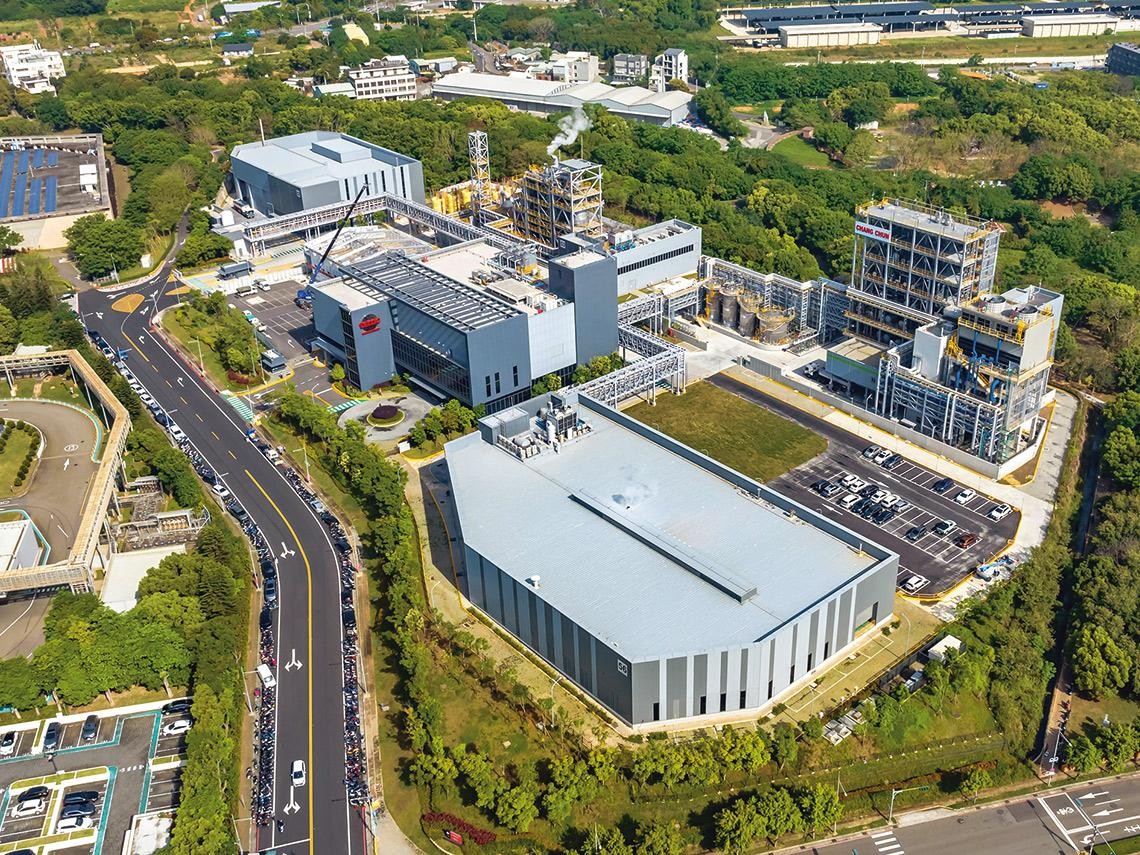
Zero-Waste Transformation of Semiconductor Grinding Sludge
An Urgent Industry Challenge
The semiconductor industry generates significant quantities of grinding sludge and silicon slurry.
As semiconductor production capacity continues to expand, waste generation increases proportionally,
making circular waste management an urgent responsibility.
Technology Breakthrough
Using proprietary separation and purification technologies, we recover valuable materials
from chemically and physically complex sludge.
From Waste to High-Value Materials
Recovered materials are transformed into high-purity inorganic materials, replacing virgin mineral
resources and serving as advanced industrial and composite material feedstocks.
Carbon Reduction & Business Value
By converting waste into valuable resources, companies significantly reduce Scope 3 emissions
while demonstrating ESG leadership and supporting Net Zero 2050 commitments.
Case Study 2
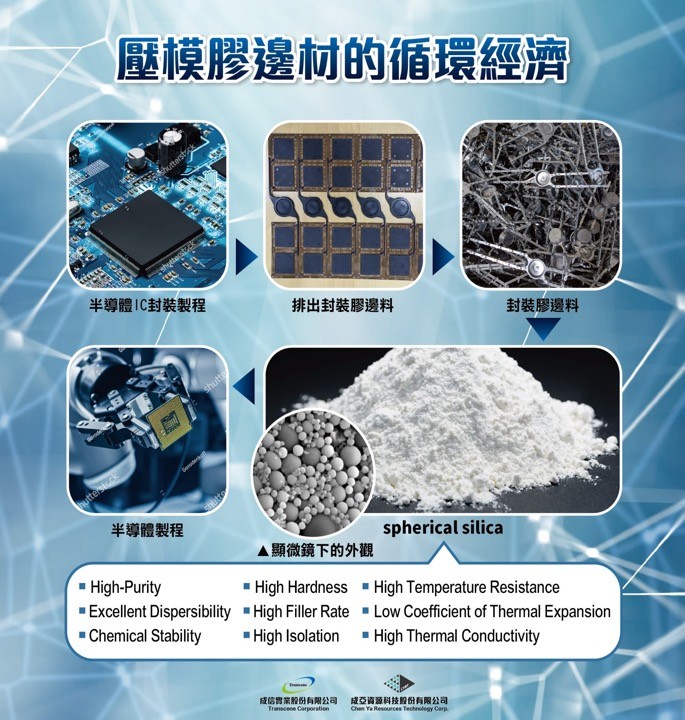
Closed-Loop Recycling of Semiconductor Packaging Process Scrap
Low-Carbon Material Upgrade
Manufacturing scrap generated during semiconductor packaging represents a substantial material cost.
Since semiconductor-grade raw materials are expensive, post-industrial recycling (PIR) provides both
cost savings and supply chain resilience while supporting low-carbon manufacturing.
Technology Breakthrough
Advanced material modification and physical reprocessing technologies preserve the original material's
superior physical properties.
From Waste to Premium Materials
Recovered materials are remanufactured into high-performance electronic-grade materials,
specialty coatings, and engineering fillers.
Carbon Reduction & Business Value
Replacing virgin quartz-derived spherical silica with recycled materials dramatically reduces carbon
emissions associated with mining and manufacturing while lowering packaging material carbon
footprints.
Case Study 3
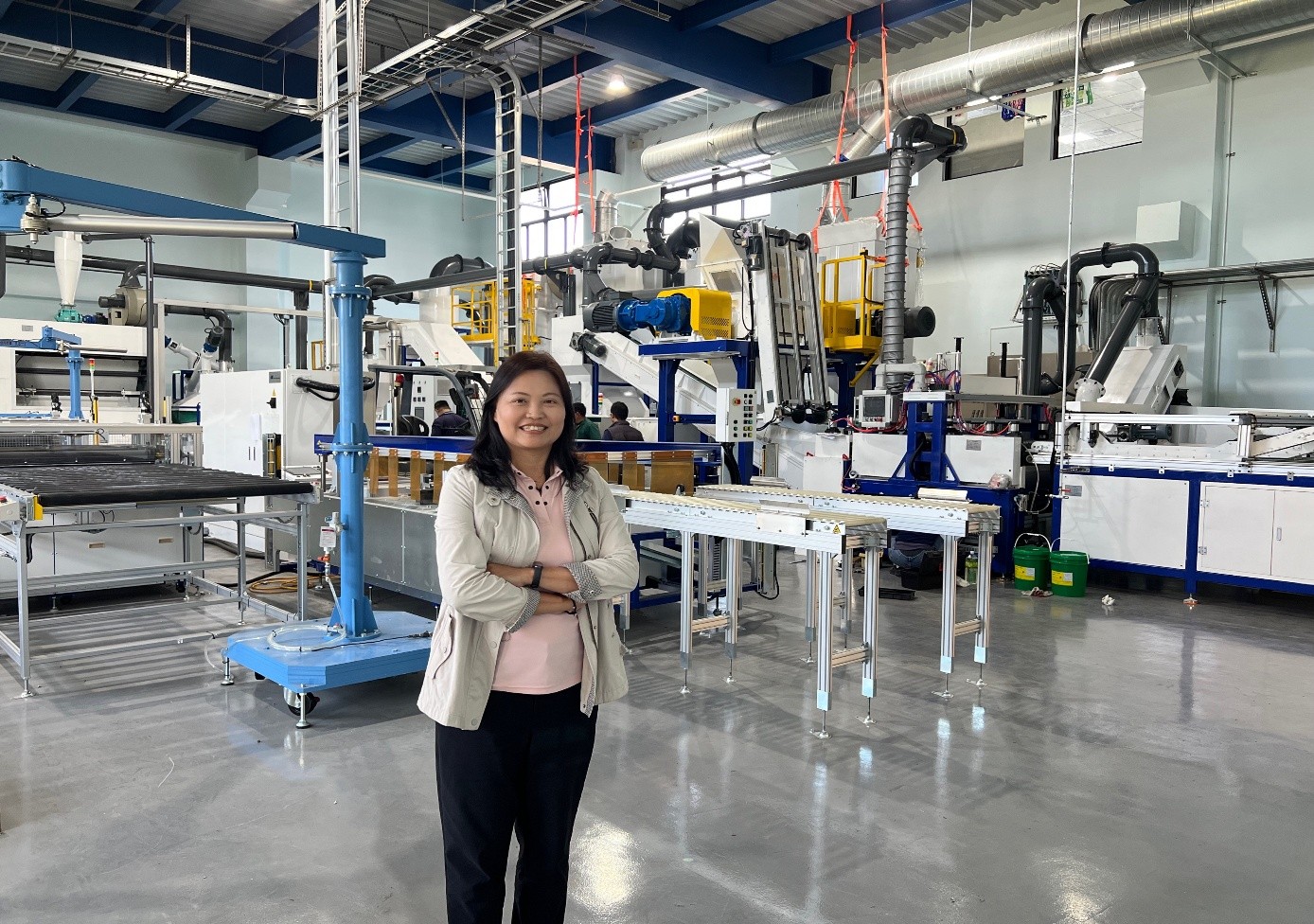
Recovering Valuable Resources from End-of-Life Solar Panels
A Rapidly Growing Market
Taiwan is approaching its first major wave of photovoltaic panel retirement, creating increasing
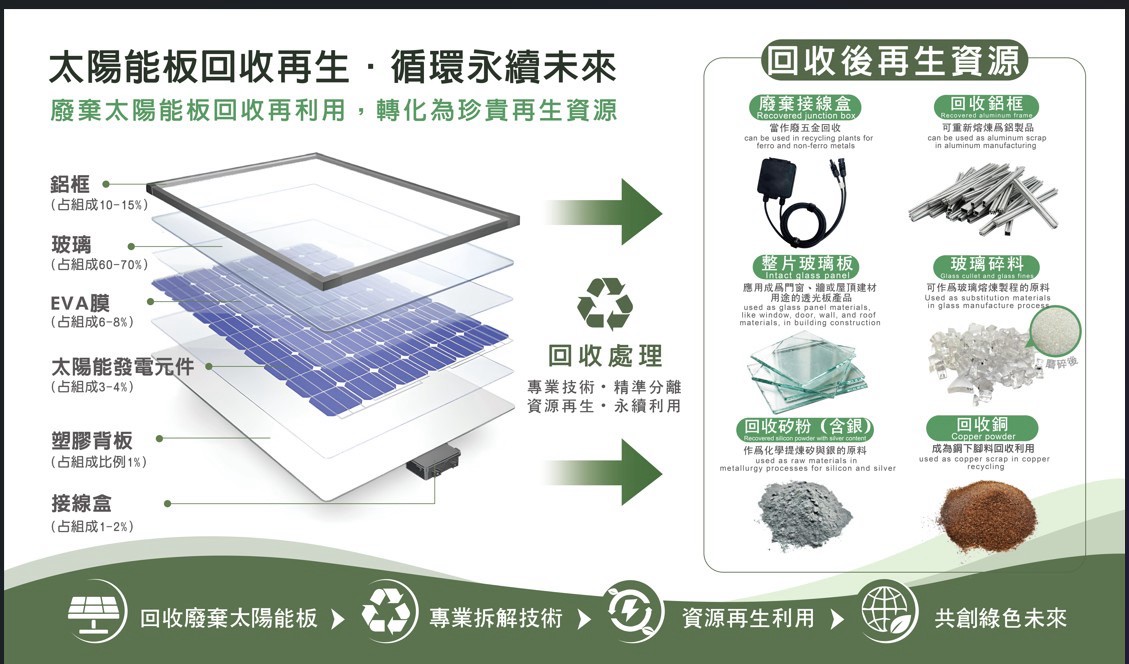
volumes of glass, aluminum, silver, silicon, and other valuable materials requiring responsible recycling.
Technology Breakthrough
Advanced mechanical dismantling and chemical refining technologies enable highly efficient separation
of metallic and non-metallic materials.
From Waste to New Resources
•Metals:
Aluminum, copper, silver, and other valuable metals are refined for direct reuse in local
smelting and manufacturing industries.
•Silicon & Glass:
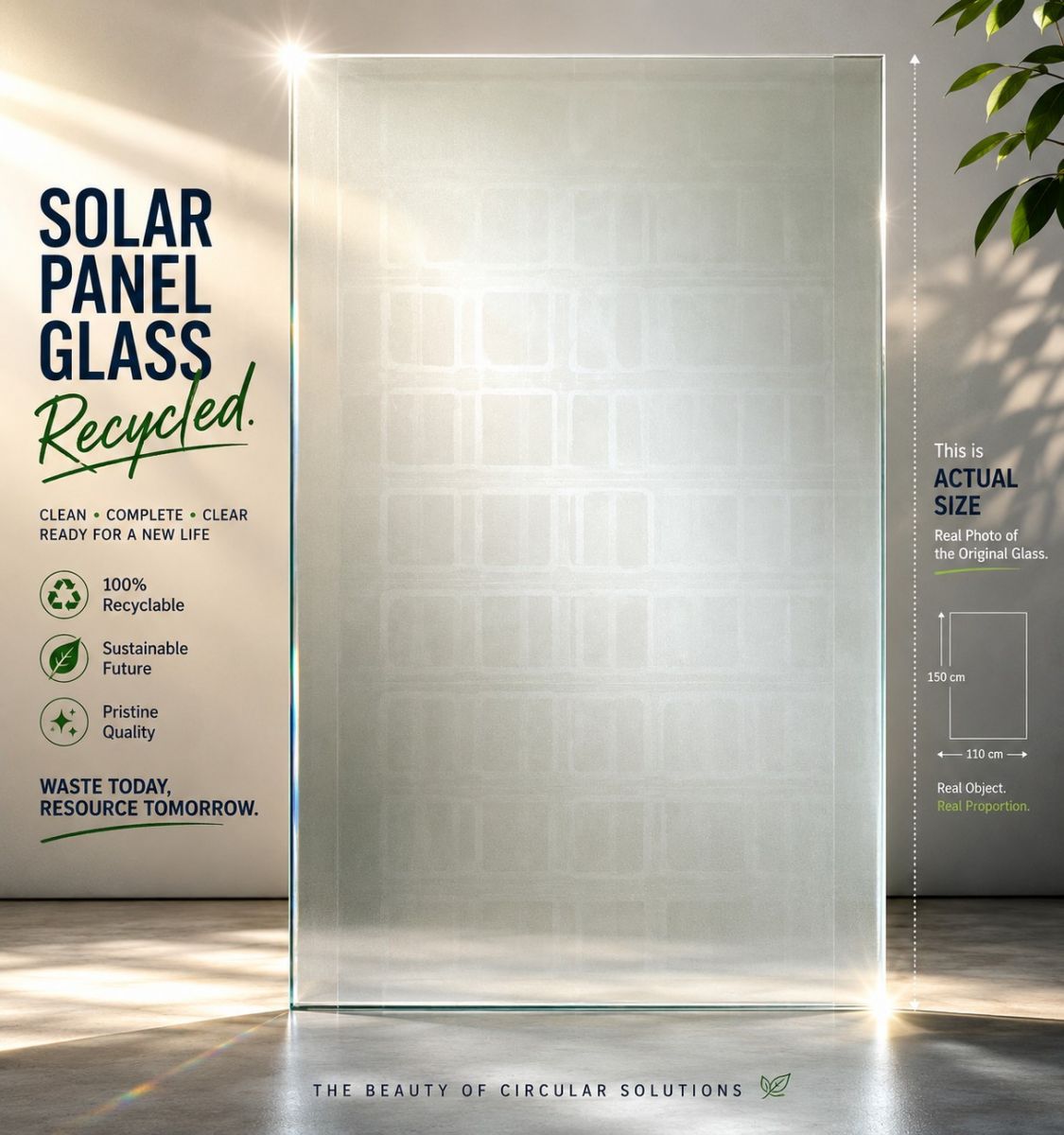
Converted into low-carbon raw materials for multiple industrial applications.
Carbon Reduction & Business Value
Producing recycled aluminum and precious metals requires only 10–20% of the carbon emissions
compared with primary mining and refining, making metal recycling one of the most effective
Scope 3 decarbonization strategies.
Proposal
Turnkey Engineering Solution for Solar Panel Recycling Plants